Product Description
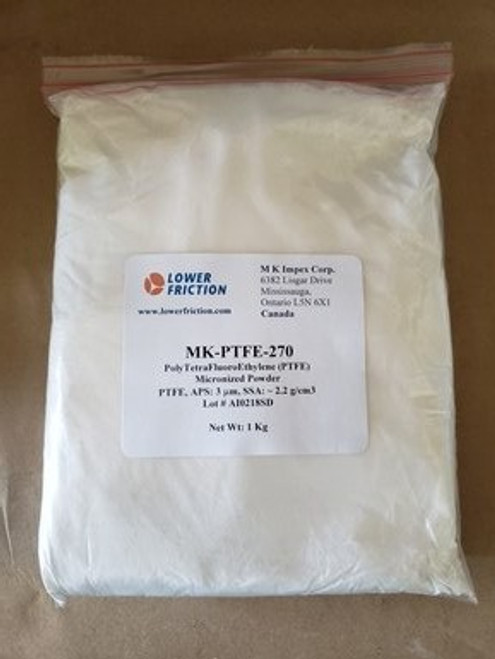
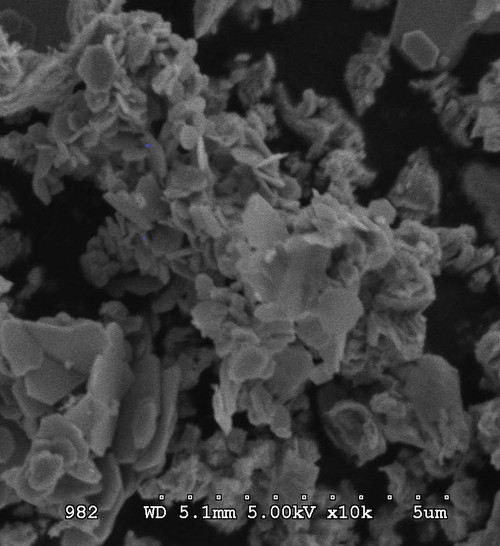
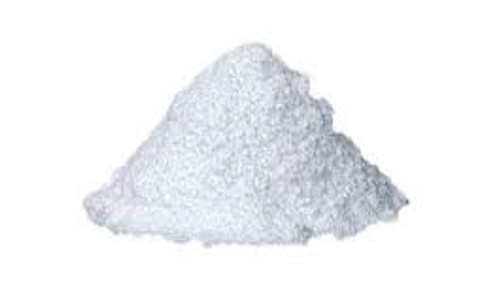
MK-PTFE-270 is a white, free-flowing micronized polytetrafluoroethylene (PTFE) powder with a brochure particle-size specification of D50 <3 micron. It is offered for evaluation as an additive in coatings, inks, polymers, elastomers, lubricants, greases and release systems where low friction, wear resistance and non-stick surface properties are desired.
Technical Specifications
| Product number | MK-PTFE-270 |
|---|---|
| Particle size specification | D50 <3 micron |
| PFOA | <20 ppb (SGS) |
| Chemical formula | (CF2CF2)n |
| CAS number | 9002-84-0 |
| Physical form / colour | Free-flowing white powder |
| Bulk density | 300 g/L |
| Specific gravity | 2.16 |
| Specific surface area (SSA) | 3 m²/g |
| Melting point | 325°C |
| Moisture content | <0.1 wt% |
| Available packs | 1 kg, 5 kg and 25 kg |
The product brochure specifies D50 <3 micron, and the grade is marketed as 3 micron. D50 is a median particle-size point and should not be taken as the whole particle-size distribution.
Key PTFE Properties and Applications
Key Material Characteristics
- Low-friction additive for reducing mechanical wear
- Improves abrasion, rub and mar resistance in formulated materials
- Non-stick properties, low surface energy and reduced stick-slip behaviour
- Chemically resistant, moisture resistant and water repellent
- Electrically insulating with good dielectric characteristics
Common Application Areas
- Industrial and automotive coatings, inks and paints
- Lubricants, greases, oils and release coatings
- Thermoplastics, thermosets and rubbers
- Electrical/electronic coatings and components, wire and cable
- Adhesives, waxes, polishes and surface-protection treatments
- Plastic or thermoplastic gears, components and other friction-modification applications
Final suitability depends on particle dispersion, concentration, carrier or resin system, substrate, temperature, load and operating environment. Testing the application before production use is recommended.
General PTFE Reference Characteristics
| Service temperature | Up to 260°C (500°F) |
|---|---|
| Low-temperature reference | Useful properties down to −240°C (−400°F) |
| Chemical resistance | Inert to practically all chemical solvents |
| Electrical behaviour | Excellent electrical insulator with exceptional dielectric properties |
These are general PTFE reference properties from the MK-PTFE-270 brochure, not guaranteed performance values for every formulation. Final performance is a function of concentration, dispersion, carrier or resin system, substrate and operating conditions.
Safety, Handling and Storage
Store PTFE powder in a tightly closed container in a dry, well-ventilated area. Prevent dust formation and ensure adequate exhaust ventilation at points where dust is generated. Wear suitable gloves and eye protection; the SDS notes that N95/P1 dust protection may be worn in areas where nuisance dust levels are present.
Per the SDS, the product is not WHMIS controlled and is not classified as a dangerous substance under GHS. Irritation of the respiratory tract, skin and eyes is still possible, as is harm if inhaled, absorbed through the skin or swallowed. DOT, IMDG and IATA transport status is listed as not dangerous goods. Review the SDS before use.
Download Product Brochure (PDF) Download Safety Data Sheet (PDF)
Refer to the brochure and SDS for detailed grade information before evaluation.
Frequently Asked Questions
What does D50 <3 micron mean for MK-PTFE-270?
The product brochure specifies a D50 below 3 micron, and the grade is marketed as 3 micron. D50 represents a median particle-size point and does not describe the complete particle-size distribution.
What applications can MK-PTFE-270 be evaluated for?
It may be evaluated as an additive in industrial coatings, inks, paints, thermoplastics, thermosets, elastomers, lubricants, greases, oils, release coatings and selected electrical or surface-protection applications.
Why is micronized PTFE used as an additive?
The brochure highlights low friction, wear and abrasion resistance, non-stick behaviour, low surface energy, moisture resistance, improved surface finish and dielectric properties as reasons PTFE is added to formulated materials.
What temperature capability is listed for PTFE micronized powder?
The brochure lists a service temperature of up to 260°C (500°F) with useful properties at temperatures as low as −240°C (−400°F). Suitability should be validated in the final formulation and operating environment.
How should PTFE micronized powder be stored and handled?
Keep the container tightly closed in a dry, well-ventilated place. Avoid dust formation, use appropriate exhaust ventilation, and follow the glove, eye-protection and dust-control guidance in the SDS.
Technical information notice: Product information is for preliminary evaluation only and does not guarantee performance or suitability. Review the current SDS, TDS, and product specifications, try a small sample first, and confirm suitability before bulk use. Read the full disclaimer